Galician steak – the best in the world?
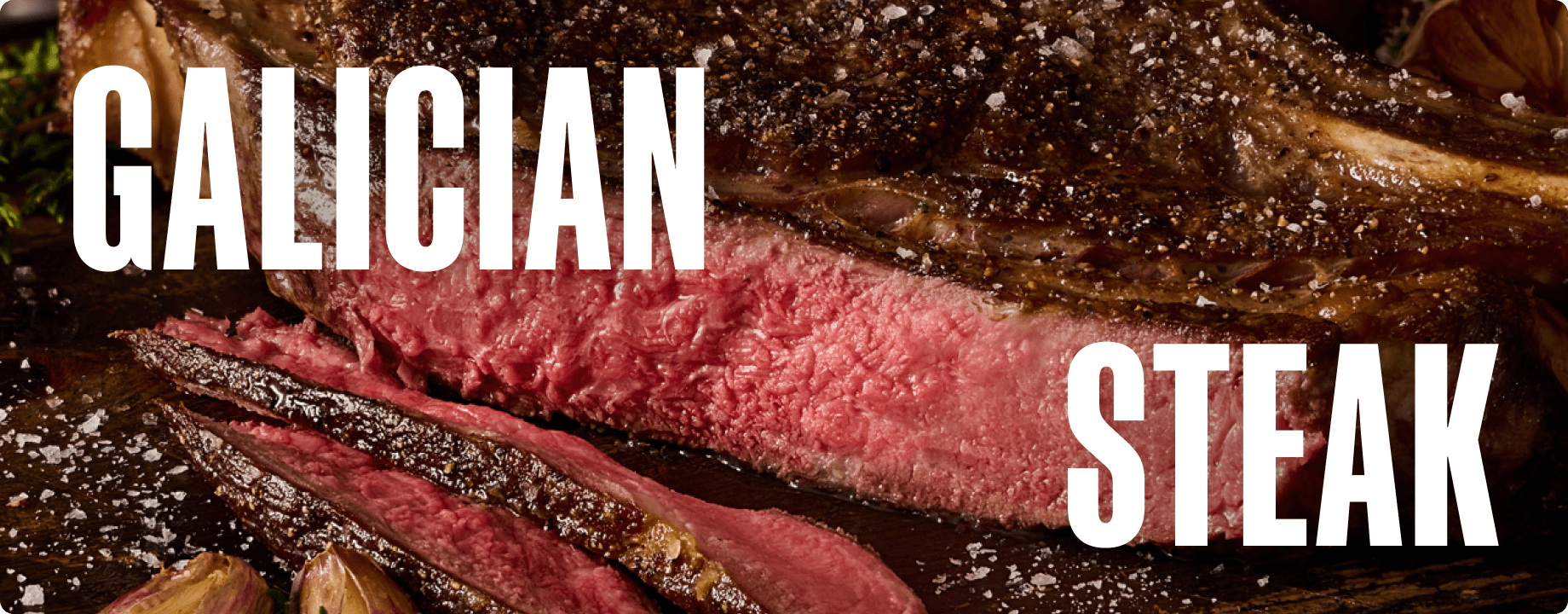
Steak, glorious steak. But did you know about Galician steak? Gordon Ramsay has gone on the record to call it the best steak in the world, and its unusual provenance has led it to be called ‘the steak that changed the world’. We say, it’s the perfect solution to Father’s Day for the steak-loving dad.
Despite all this acclaim, it’s probably fair to say that Galician steak is not that well known unless you’re into fine dining or you’re a food influencer (should that be a steak-fluencer?). The steak comes from Galicia, the autonomous community in northwestern Spain, which sits on the Atlantic coast above Portugal.
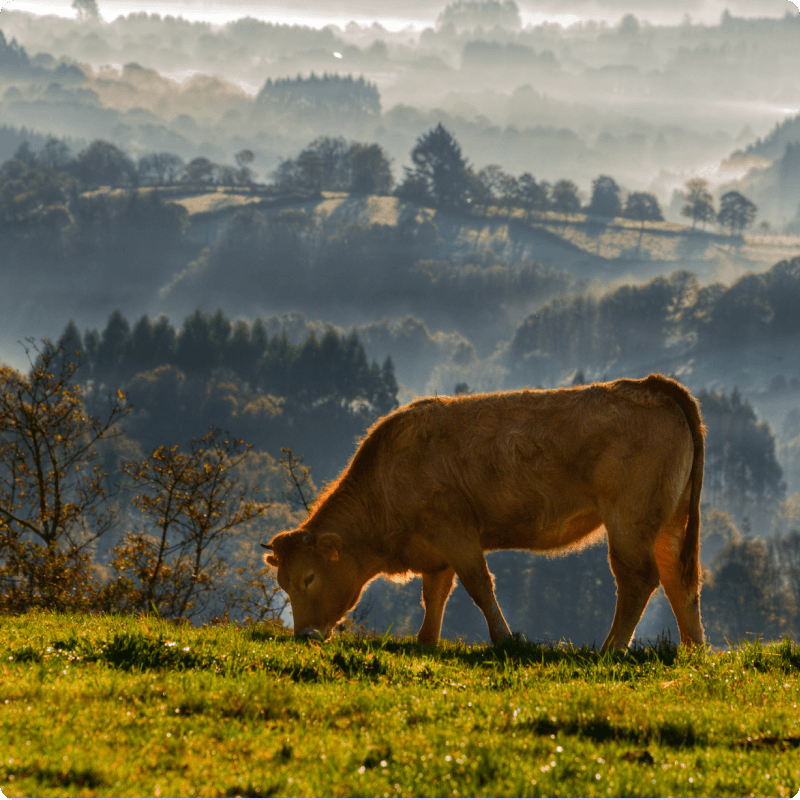
Galician beef comes from cattle that are much older than is usual in the rest of the world, this is why it's been called ‘the steak that changed the world’. The typical age of beef cattle in the UK is about two years to 30 months old, and it’s younger in France, the US and Australia. This is largely because steak is more tender at this age. Whereas, Galician beef often comes from ex-dairy cows, so are around six to eight years old.
Beef with a second life
The classic dairy cattle breed through most of Europe is Friesian, known in Spain and Italy as Frisona, and it’s these cows that end up as Galician beef. In the UK the meat from ex-dairy cows is usually considered too tough for steaks, so gets used for mince.
As well as being older, the cows also live on extremely lush pastures fed by Atlantic rains. Galicia gets about 850 to 1,000 mm of rain per year, which is similar to the northwest of England, Devon, Cornwall and Ireland. So, you could say that the rain in Spain stays mostly on the hills of Galicia. Local farmers also say that the mineral rich soil and salty sea air contribute to the unique flavouring.
Aged for deeper flavour
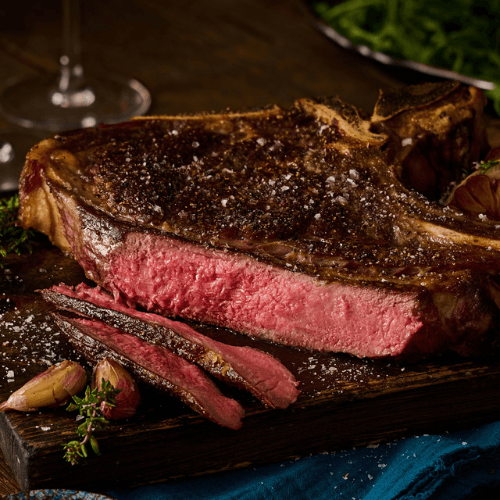
So, what does this legendary beef actually look and taste like? Frisona cattle tend to have more fat in their muscle tissue (known as marbling) than classic beef varieties. And a longer life at pasture means they also build up a more developed muscle structure. So, the first thing you’ll notice is the fat – it’s ivory-yellow rather than white, as you find with most beef – which is marbled through the deep ruby-coloured meat.
Flavour-wise, the beef is creamy, gently nutty and grassy, or as one local farmer described it, “beefy and milky”. There’s also a lingering mineral sweetness that reflects the unique Galician landscape. As Gordon Ramsay puts it: “the terrain!”
A big part of the flavour profile comes from the ageging process. It is dry-aged under controlled temperature, humidity and airflow for a minimum of 30 days. During this process, enzymes gently break down the muscle fibres to make them more tender. Also, moisture evaporates, which concentrates the flavour and creates a beefier-tasting, umami-rich steak.
The meat is also left on the bone while ageging, so the muscles keep their shape and too much moisture isn’t lost. At the end of dry-ageging, the steak doesn’t just have an incredibly rich flavour, but is also much more tender than you’d expect for an older animal.
Meet DukesHill
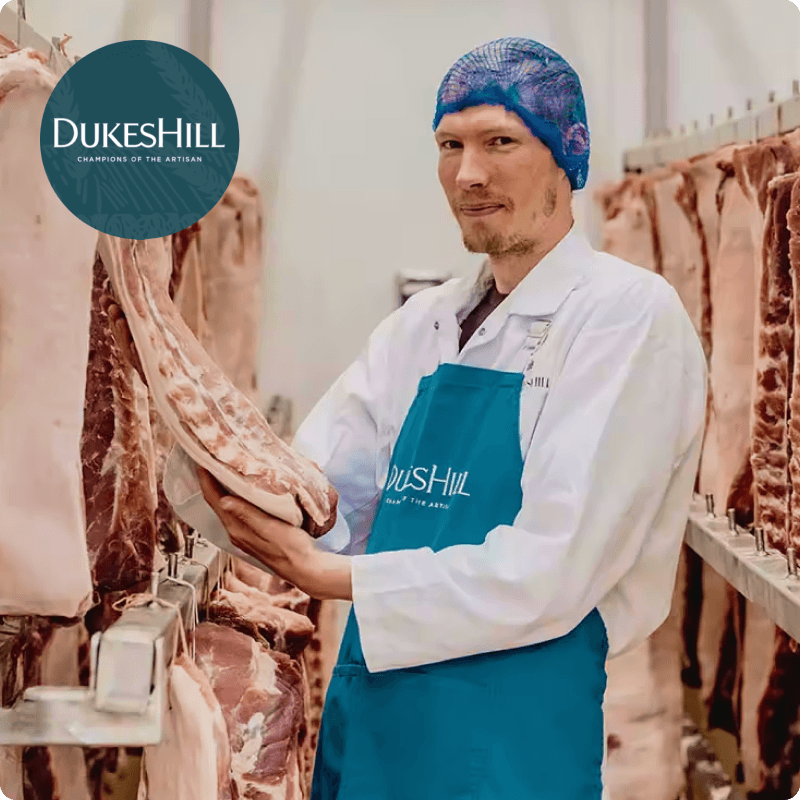
We get our Galician beef from artisan butchery and farm shop, DukesHill. The company has built its reputation by being utterly committed to quality, provenance, and of course, exceptional flavour. They work with farmers and artisan producers who use traditional methods to make sure all of their products are of the highest quality. These values make them the perfect partners to curate this Galician beef.
DukesHill was founded in a cow shed in Shropshire in 1985 with the purpose of creating the very best Wiltshire hams. Their reputation grew and by 1998 they were supplying Queen Elizabeth II and received a royal warrant in 2003. King Charles is also a fan and the company received a royal warrant from him in 2024.
The home steakhouse masterclass
A 1kg steak means business, so don’t treat it as an ordinary ribeye. First off, the meat should be tempered – this means properly controlling the temperature. We’d recommend taking it out of the fridge two to six hours before you’re going to cook it. If in doubt, err on the long side, as this will ensure all the meat reaches room temperature before cooking.
Next, salt it early, an hour before cooking, on both sides. This is known as ‘dry brining’ and has two functions: the moisture is drawn out of the meat by the salt, and the salt gets absorbed into the meat where it alters the muscle proteins. The end result is a more tender, juicier steak and a crisp crust.
When it comes to actually cooking your steak, you want it ‘hard and hot’. If possible, cook over charcoal or sear in a really hot griddle or pan. Stop at rare to medium rare. Let it rest, then slice across the grain, and sprinkle with good salt. One helpful guideline is the ‘rule of threes’ – three minutes on one side, three minutes on the other, then rest for three minutes. It’s really that simple with meat this good.
Remember hot, hot heat rather than a slow build is key. This will make sure you have a serious savoury crust and properly caramelised fat. Don’t go beyond medium-rare as overcooking meat with a higher fat-to-meat ratio will cause the fat to contract. You can also allow for a shorter resting time than usual and serve onto a warm plate, as both prevent the fat from cooling and losing its texture.
Here are three steak recipes that we think you'll love, but there are plenty more on the site too. Try the French bistro classic steak frites and shallot sauce, another French classic steak and peppercorn sauce aka steak au poivre, while Argentinian steak and chimichurri salad gives you a good hit of veggies too.
A rare opportunity
A few last words – a) older is better and b) don’t trim that beautiful yellow fat.
We have just 200 of these steaks and they are only available for delivery in the week leading up to Father’s Day. You can find them on the site from 3rd June.
When they're gone, they’re gone.
Shop now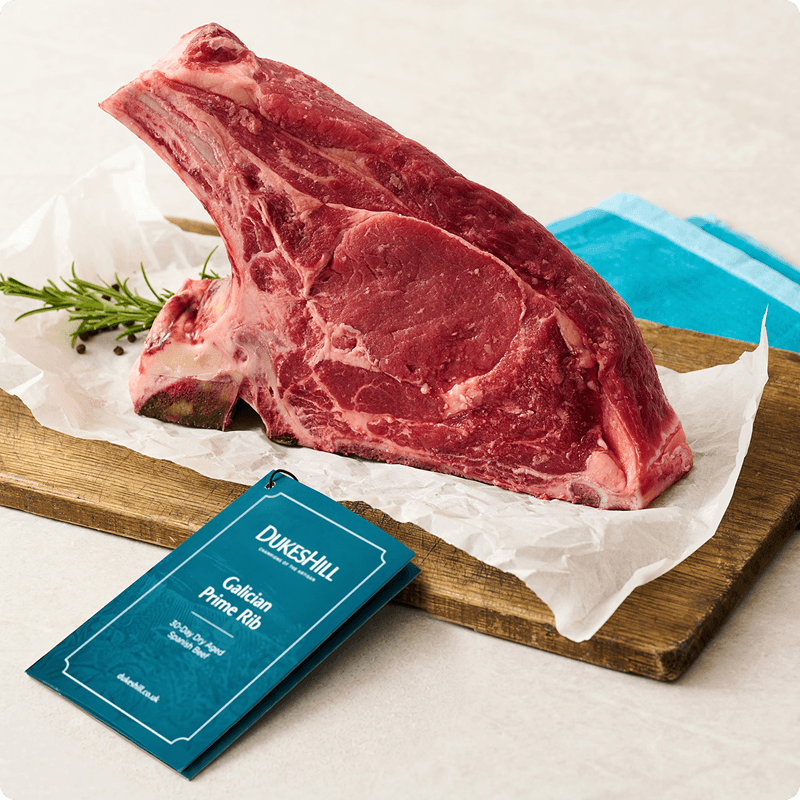
Shop around
 The ultimate steak for dad
DukesHill Galician 30-day dry-aged rib steak.
Shop now Wine not
Look to Spain for structured reds like Rioja or Ribera del Duero.
Shop now How to cook your steak
Tasty recipes to make the most of this humdinger.
See recipes