In season: Forced rhubarb
Sweet, tender and squeaky.
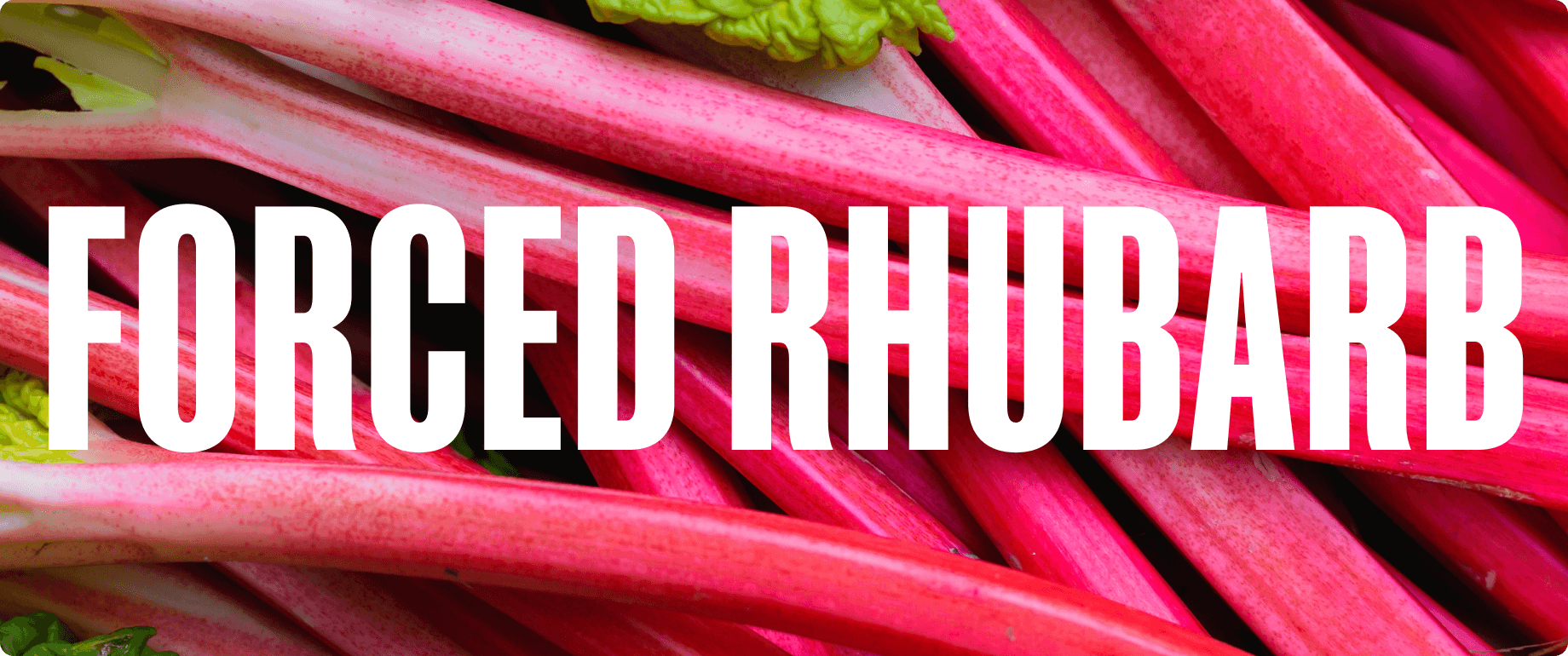
Winter is dark, long and not much grows (apart from root veg and hardy greens). We’ve now reached spring, and with it comes one of our favourite crops - sweet, tender and electrically pink, forced rhubarb. Find out what makes this such a special crop that has its own DOP (Protected Designation of Origin).
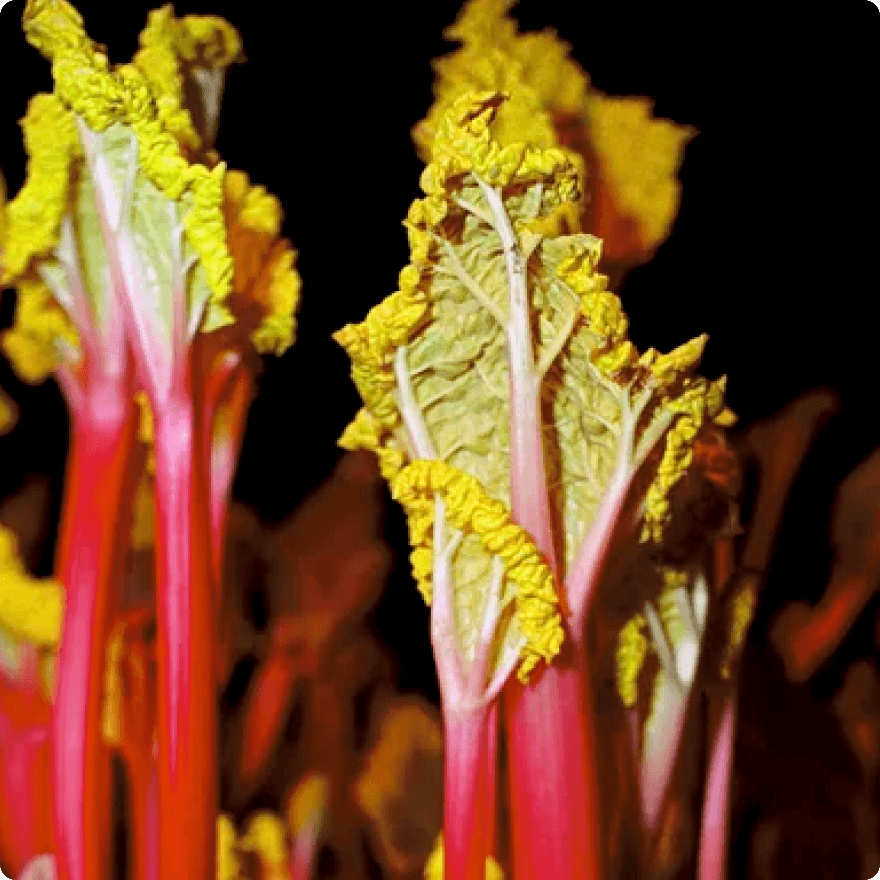
The dark arts of rhubarbery
South Yorkshire is the heart of the rhubarb industry in the UK, specifically the Rhubarb Triangle. This 9-square mile area south of Leeds, between Wakefield, Morley, and Rothwell, produces 90% of the world’s forced rhubarb. Their produce is eaten in swanky eateries as far away as Paris and New York.
So, what is forced rhubarb and how does it differ from its easy-going sibling? The roots (or crowns) are first grown outside where the sunlight means they can photosynthesise and make glucose. They are then ‘forced’ to grow early, by being moved inside darkened sheds. The warmer conditions provoke spring growth while the darkness means they shoot up fast.
Don’t force it: how to enjoy forced rhubarb
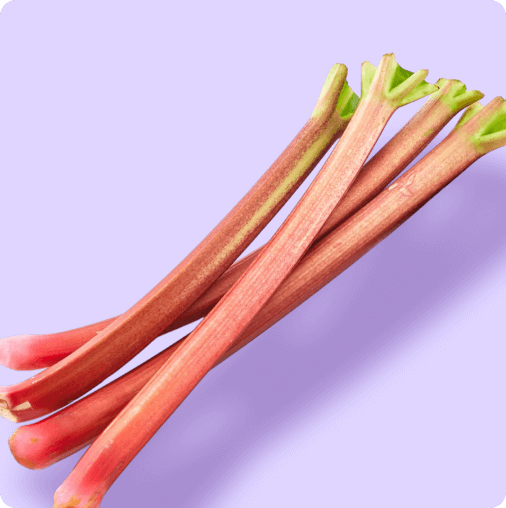
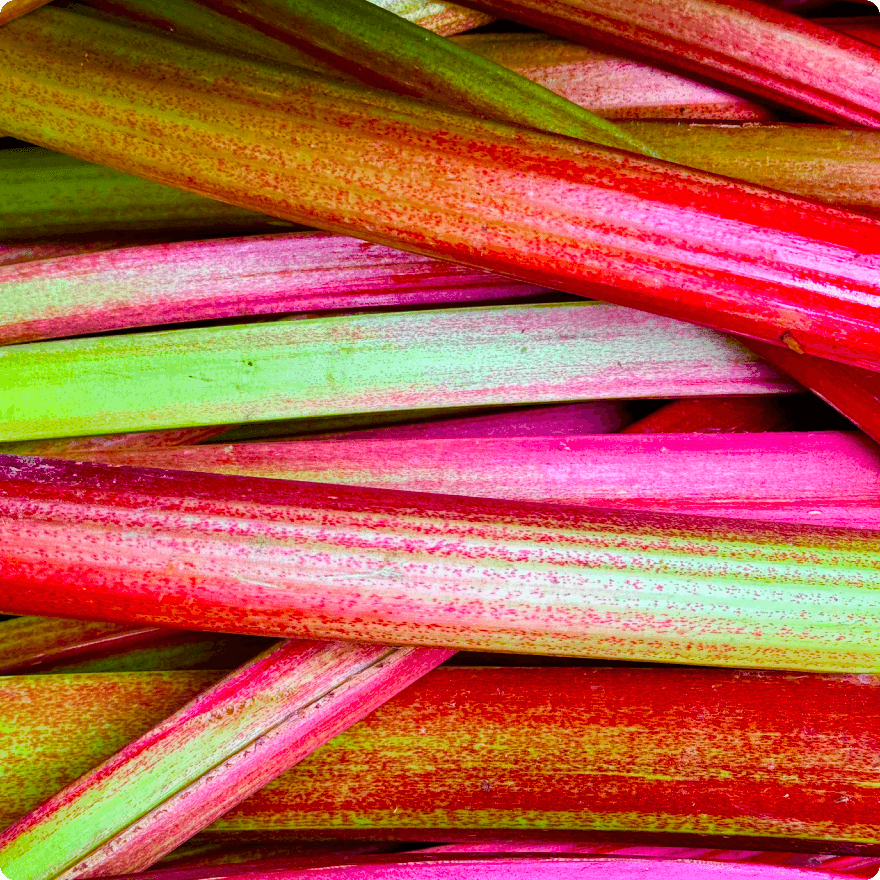
Forced rhubarb shoots are thinner and pinker than when they’re grown in the summer. It has a delicate, sweet-tart flavour, and is both less acidic and less fibrous than summer rhubarb. It pairs well with the warming quality of cinnamon and the creaminess of vanilla, as well as fiery ginger and sharpness of citrus.
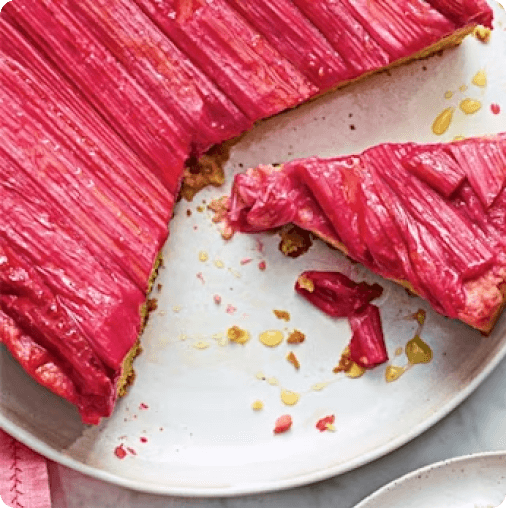
It would be a shame to leave rhubarb only for dessert, it is botanically a vegetable after all. You can use its gentle tartness to cut through richer meats like pork, lamb and duck. If you’re thinking beyond rhubarb crumble or fool, try tarts, cakes and or crème brûlée.

Rhubarb facts you might not know
- Yorkshire’s rhubarb legacy began in 1877, exploding into a 200-farm powerhouse by the early 20th century. At its peak, 'Rhubarb Express' trains raced the harvest to London every single night. Today, only nine of those original farms remain.
- Forced rhubarb is grown by candlelight to prevent photosynthesis and keep it sweeter.
- When rhubarb is forced it grows so fast that you can hear it - it makes a creaking popping sound.